
i. Visión general de las etiquetas electrónicas RFID
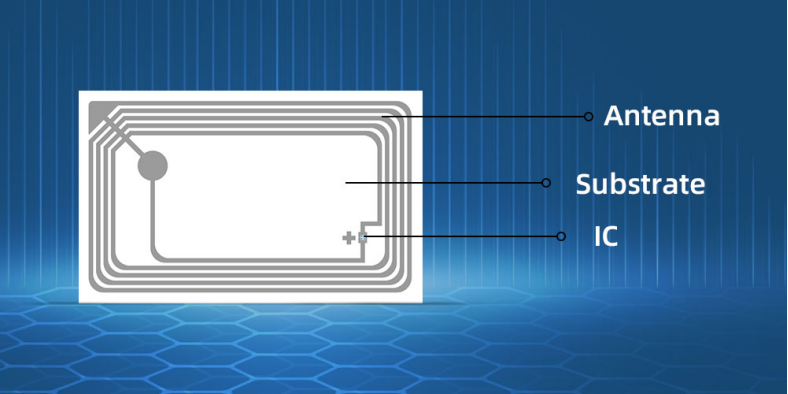
Las etiquetas electrónicas RFID (identificación por radiofrecuencia) son una tecnología de identificación automática que utiliza señales de radiofrecuencia para identificar automáticamente los objetos objetivo y obtener datos relevantes. Compuestas por un chip y una antena, pueden almacenar y transmitir información digital y se utilizan ampliamente en seguimiento logístico, gestión de inventarios, gestión de activos y otros campos. Los componentes principales de una etiqueta electrónica son: un chip (CI), una antena y un sustrato. El chip se encarga de almacenar y procesar los datos, la antena se utiliza para transmitir y recibir señales de radiofrecuencia, y el sustrato proporciona soporte físico y protección.
Figura 1: Estructura básica de una etiqueta RFID
iI. Tipos de etiquetas electrónicas RFID
2.1 Inlay RFID
La incrustación es el componente principal de una etiqueta RFID, compuesta por un chip, una antena y un sustrato. Todas las incrustaciones utilizan una estructura similar, diferenciándose principalmente en la forma y el tamaño de la antena y en el tipo de chip. El chip se une a la antena mediante un adhesivo conductor anisotrópico (ACA) mediante un proceso de termoformado. Existen dos tipos de sustratos para antenas: PET y poliimida. El PET es un sustrato común y versátil; la poliimida es resistente al calor, pero más costosa. La antena se fabrica mediante un proceso de grabado en aluminio.
2.2 Etiqueta RFID de papel
Las etiquetas de papel son productos etiqueta completos. La principal diferencia entre las etiquetas de papel y las etiquetas con incrustación radica en que estas últimas cuentan con un papel frontal imprimible. El material del papel frontal puede ser PET o papel recubierto.
2.3 Etiquetas RFID laminadas
Las etiquetas laminadas están fabricadas con material PVC o PET y ofrecen una buena durabilidad y resistencia al agua, lo que las hace adecuadas para entornos exteriores o exigentes.
2.4 Etiquetas RFID anti-metálicas
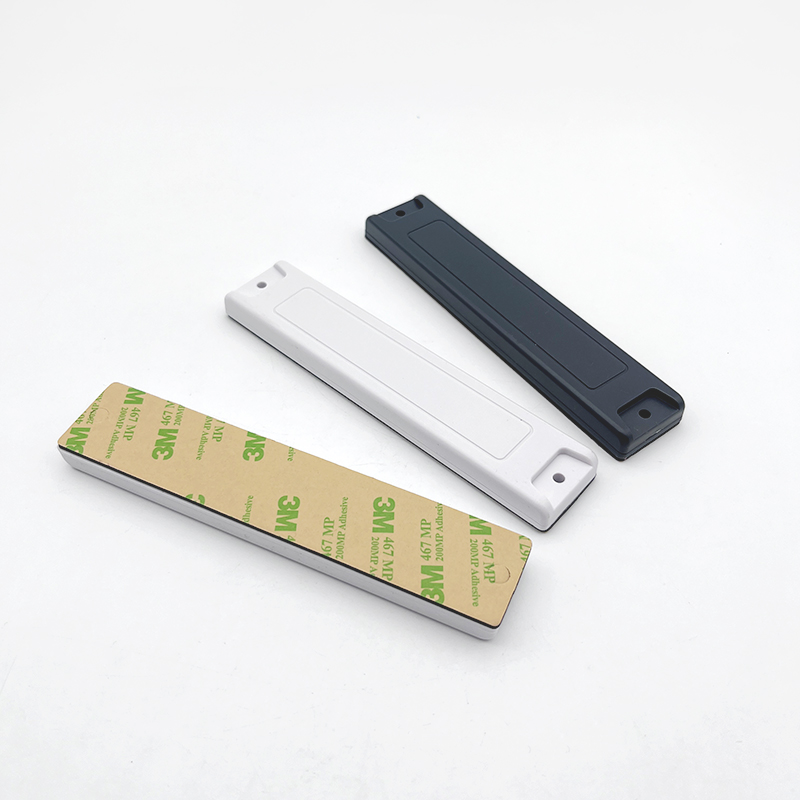
Las etiquetas antimedal están diseñadas específicamente para su fijación en superficies metálicas. Emplean un diseño especializado de antena antimedal o utilizan espuma para elevar el inlay y reducir el impacto del metal. Los materiales incluyen ABS, PCB, cerámica, etc., con una distancia de lectura de 3 a 10 metros.
Figura 2: Etiquetas antimedal
2.5 Etiquetas RFID a prueba de manipulación
Las etiquetas a prueba de manipulación están diseñadas especialmente para garantizar que se destruyan al ser retiradas.
Principio de protección contra manipulación 1: La etiqueta presenta cortes en forma de tijera; al despegarla tras su aplicación, se dañará la etiqueta.
Principio de protección contra manipulación 2: La antena está fabricada con una lámina cerámica delgada; si se retira forzadamente tras su aplicación, la etiqueta se hará añicos.
2.6 Etiquetas RFID de forma especial
Las etiquetas de forma irregular se diseñan con formas especiales según los escenarios de aplicación, como etiquetas para lavandería de PPS, etiquetas de abrazadera para cables, pulseras de silicona, etc., para satisfacer las necesidades específicas de distintos sectores industriales.
2.7 Etiquetas RFID encapsuladas
Las etiquetas en caja suelen tener una carcasa exterior fabricada con material ABS y una capa interior de poliimida, lo que proporciona una excelente protección y durabilidad.


