
An RFID microchip syringe is a sterile, single-use injector pre-loaded with a glass-encapsulated RFID transponder (commonly called a "glass tag" or "glass tube"). The transponder is injected subcutaneously — typically between the shoulder blades of a pet, or under the skin of livestock, fish, or laboratory animals — providing a permanent, unique electronic identity that lasts for the animal's entire life.
Because implantation requires no surgery and takes only seconds, microchip syringes are the standard identification method for:
Glass tube transponders come in standardized diameters matched to the animal:
|
Glass tube size |
Typical applications |
|---|---|
|
1.25 mm |
Mice, small laboratory animals, ornamental fish |
|
1.4 mm |
Cats and small-breed dogs |
|
2.12 mm |
Large dogs, horses, cattle, and other livestock |
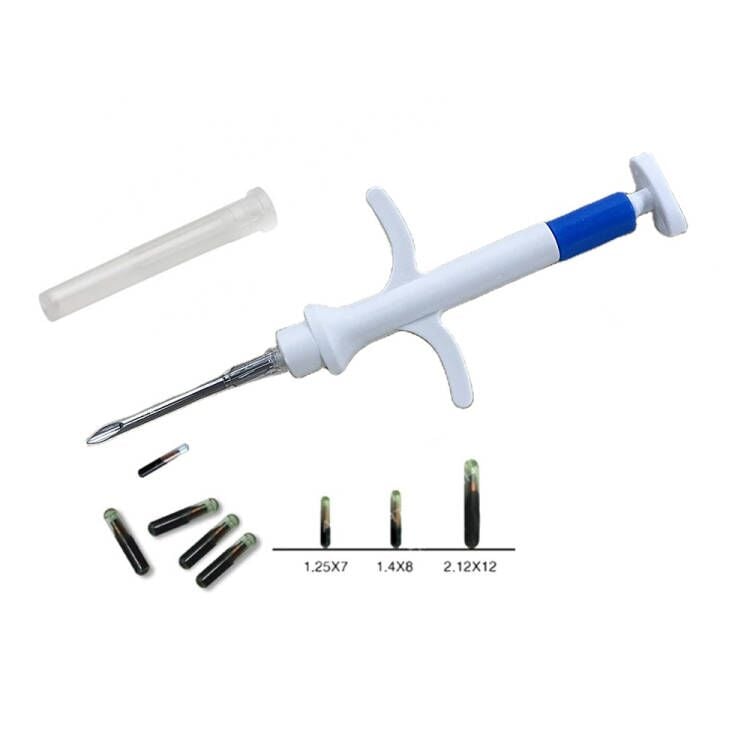
Read distance: Because these are low-frequency (134.2 kHz, ISO 11784/11785) passive transponders, typical read range with a handheld reader is 3–5 cm.
XINYE microchip syringes are equipped with a two-stage plunger that ejects the glass tube completely from the needle — confirmed by a distinct tactile and audible feedback — so every implantation is verified at the moment it happens, even for users with limited experience. This dramatically reduces the risk of partial ejection or failed implantation common with single-stage syringes.
Thanks to precise needle–plunger alignment, each transponder is delivered into the subcutaneous layer at the correct position and angle, settling stably under the skin. The result: consistent, reliable reads for the lifetime of the animal — no intermittent scanning failures caused by misplaced chips.
Guangdong Xinye Intelligent Label Co., Ltd. has specialized in RFID animal identification products for nearly two decades. We deliver ICAR-certified RFID ear tags manufactured to international standards, please feel free to contact us and ask for detail!


