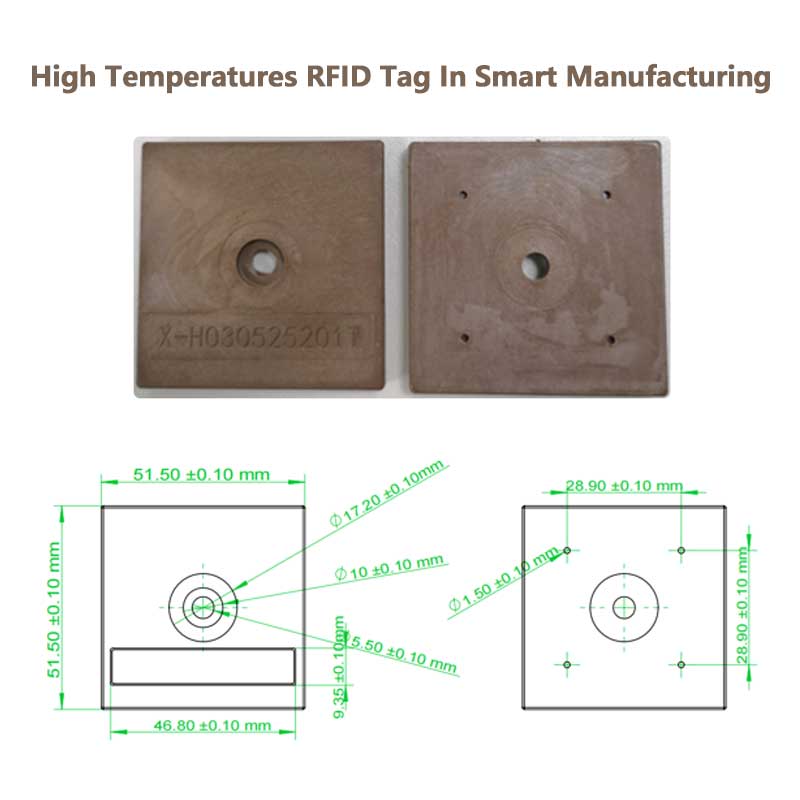
התנאים הקשים של סביבות ייצור תעשייתיות מטילים דרישות גבוהות ביותר על התכונות הפיזיות והאמינות של תגיות RFID. בניגוד לתגיות RFID ברמת הצרכן או ברמת הלוגיסטיקה, תגיות RFID תעשייתיות חייבות לשמור על ביצועי קריאה/כתיבה יציבים בתנאים קיצוניים כגון טמפרטורות גבוהות, לחות גבוהה, הפרעות אלקטרומגנטיות חזקות, נזק כימי ותנודות מכניות. לדוגמה, בתהליך הצביעה בייצור רכב: לאחר הזרקת הצביעה, גוף הרכב חייב לעבור אפייה וצמיחה בטמפרטורה גבוהה של 180–230° צלזיוס, מה שמהווה אתגר קשה במיוחד לסבילות הטמפרטורה של תגיות RFID. ליישומים מסוג זה, תגיות RFID תעשייתיות עמידות לטמפרטורות גבוהות משתמשות בחומרים מיוחדים להכלה, כגון חומר קרמי או PEEK (פוליאתר אתר קטון), אשר הם פלסטיק הנדסי מיוחד. שבב הפנימי מאובטח בתהליכים מיוחדים כדי להבטיח שלא תתרחש עיוות, התנתקות שכבות או ירידה בביצועים בסביבות טמפרטורה גבוהה, תוך שמירה על תקשורת אמינה עם הקורא.

הביצועים נגד מתכת הם مواصفה טכנית עיקרית נוספת לתגיות RFID תעשייתיות. בסביבות מתכתיות, גלי אלקטרומגנטיים יוצרים השתקפות ואפקטים של זרמים מערבבים, מה שמפריע קשות לפעולתם הרגילה של תגיות RFID, ומביא לירידה בטווח הקריאה או אפילו לכישלון מוחלט. כדי להתמודד עם הבעיה הזו, תגיות RFID נגד מתכת משתמשות בעיצובי אנטנות מיוחדים ובמבנים חומריים מיוחדים, כגון הוספת שכבת מגן מגנטית מסריקה, אימוץ מבנה אנטנה תלת-ממדי, או ניצול הפער האווירי בין תת-הבסיס של התג לפני המתכת כדי לבודד את ההשפעה של המתכת על השדה האלקטרומגנטי. בנוסף, לתגיות RFID תעשייתיות חייב להיות רמת הגנה גבוהה, בדרך כלל בהתאם לסטנדרטים IP67 או IP68 — כלומר הן אטומות לחלוטין לאבק ויכולות לסבול צלילה קצרה או צלילה מתמשכת — כדי לעמוד בסביבות קשות כגון אבק מתכתי במפעלי דקירה, ניצוצות מעופפות במפעלי ריתוך ונוזלים כימיים בתחנות ניקוי. בסביבות קורוזיביות כגון עיבוד כימי או גלוון, גוף התג חייב גם להיות עשוי PTFE (פוליטטרהפלואורואתילן) או לעבור עיבוד במעטפת מיוחדת כדי להתנגד לקורוזיה על ידי מדיה חומציים ובסיסיים.
בחירת תג RFID שמתאים באמת לסביבות קשות היא קריטית. חברת Guangdong Xinye Intelligence Labels ממליצה במיוחד על תגים בעלי תדר גבוה, עמידים בחום ובהשפעות מכניות, המבוססים על חומר PPS. התג מצופה בגוף חזק במיוחד מ-PPS, מה שנותן לו עמידות מעולה בחום, עמידות בהשפעות מכניות, דרגת הגנה גבוהה ואורך חיים ארוך, כך שהוא פועל באופן אמין גם בתנאי תעשייה קיצוניים. התג מצויד במעבד I-CODE X הפועל בתדר 13.56 MHz, עם טווח קריאה של עד 59 מ"מ על משטחים שאינם מתכתיים, תמיכה ב-100,000 מחזורי כתיבה, ושימור נתונים למשך עד 10 שנים. דרגת ההגנה שלו היא IP68, מה שמבטיח ביצועים יוצאי דופן גם בסביבות בעלות לחות גבוהה, אבק, טמפרטורות גבוהות או הצלבות מכניות חוזרות. בין אם מותקן על פלטות קו ייצור, לוחות כלים, או בשימוש בתהליכי חום גבוה או ביישומים של ציוד כבד, התג מספק תמיכה אמינה ועקבית לאיסוף נתונים למערכות MES של חברות ייצור, ולכן מהווה בחירה אידיאלית לניהול שדה תעשייתי.