
In the hyper-competitive global retail landscape, real-time data is the new currency. For IoT system integrators and global brands, RFID (Radio Frequency Identification) has evolved from a "luxury tech" to a foundational necessity. This article explores how RFID labels bridge the gap between physical inventory and digital intelligence, significantly reducing the revenue loss caused by out-of-stock scenarios.
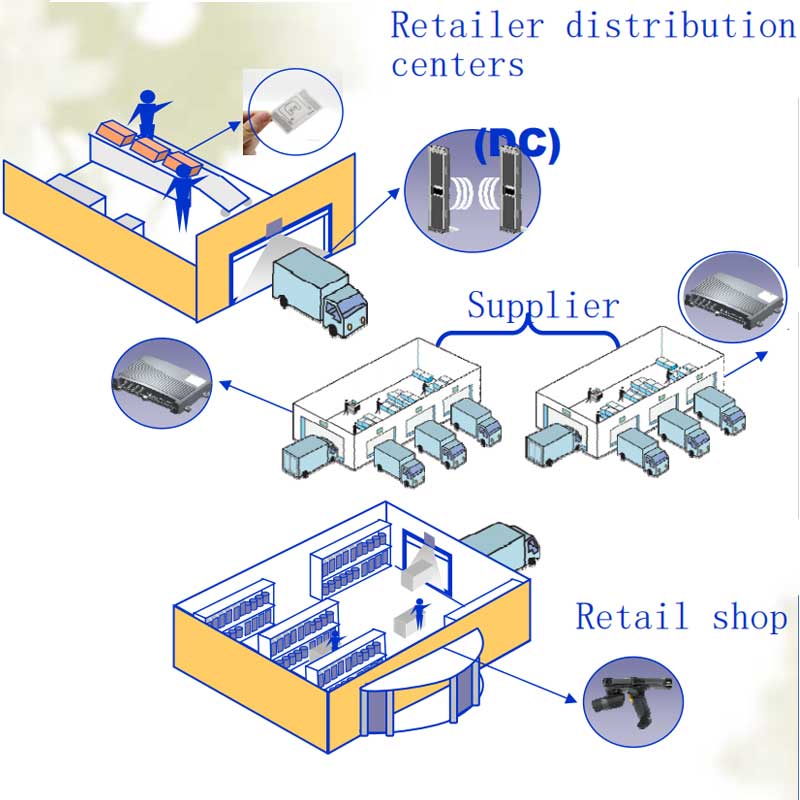
The journey from the Distribution Center (DC) to the retail shelf is often a "black box" for many retailers.
The Revenue Gap: Global retailers lose an estimated $69 billion annually due to stockouts and poor inventory management.
Operational Friction: Low inventory turnover rates at DCs and warehouses due to manual counting and human error.
Information Silos: Lack of synchronization between suppliers and retailers.
To achieve true visibility, we recommend a "Source-to-Shelf" strategy:
Mandatory Tagging: Suppliers must apply RFID labels at the carton and pallet level before dispatch.
Automated Tracking: Implementing RFID portals at DC dock doors to capture movement automatically without line-of-sight requirements.
Velocity: Exponentially increased inventory turnover at DCs.
Lean Operations: Significant reduction in safety stock (buffer inventory) levels.
Precision: Real-time demand-supply balancing, ensuring the right product is in the right place at the right time.
Once goods reach the storefront, the challenge shifts to granular management and loss prevention.
Phantom Inventory: Items that are in the system but not on the shelf.
Inefficient Replenishment: Staff spending more time looking for products than serving customers.
Shrinkage: Increasing pressure from theft and administrative errors.
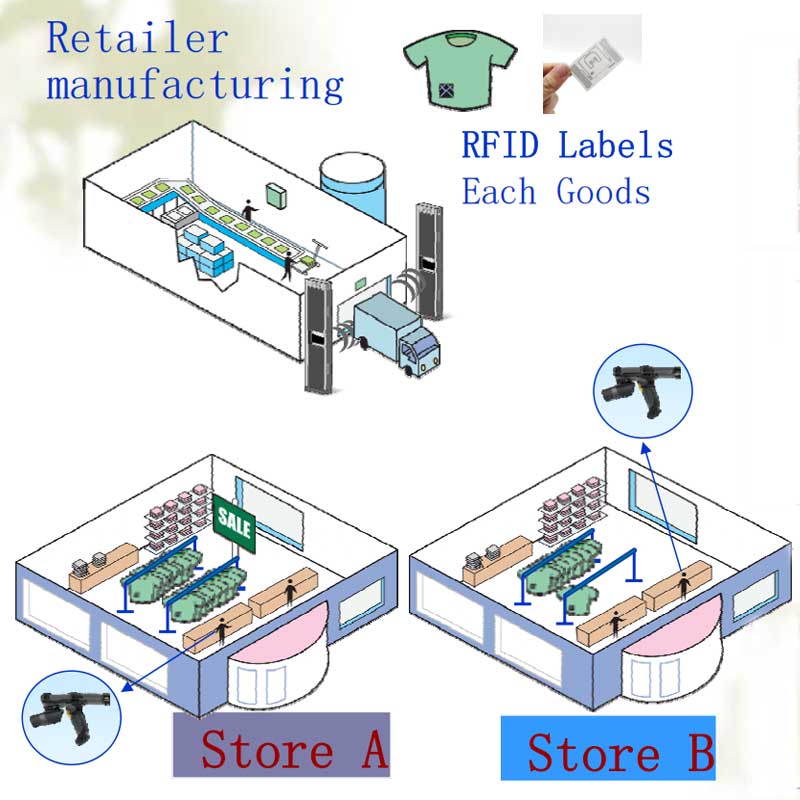
Item-Level Tagging: Every individual SKU is equipped with a high-performance RFID label.
Handheld Interactivity: Employees use Mobile RFID Handheld Readers for rapid cycle counting (taking minutes instead of days).
Fixed Overhead Infrastructure: Overhead/Zone Readers provide 24/7 automated inventory monitoring and real-time alerts for misplaced items.
Omnichannel Readiness: Achieving 99% inventory accuracy, essential for "Buy Online, Pick Up In-Store" (BOPIS) models.
Shelf Availability: Reducing the average 7.1% out-of-stock rate, directly boosting sales conversion.
Loss Prevention: Intelligent monitoring of high-value items to mitigate theft and shrinkage.
For IoT integrators and brands in Europe, North America, and East Asia, the quality of the RFID inlay and conversion is critical.
Customized Sensitivity: Labels optimized for various materials (liquids, metals, or delicate fabrics).
Global Compliance: Ensuring labels meet international standards (EPC Gen2, ISO 18000-6C) for seamless cross-border logistics.
Durability: High-quality adhesives and face-stocks that withstand the rigors of global shipping.
RFID is no longer just about tracking; it is about Retail Intelligence. By integrating RFID labels into the core of the IoT ecosystem, retailers can transform their supply chains into responsive, transparent, and highly profitable networks.


