
NFC ni kifupi cha Near Field Communication, teknolojia ya mawasiliano bila waya ya umbali mfupi. Iliyoundwa pamoja na Philips na Sony, NFC ni teknolojia ya utambulisho bila mwasiliano na muunganiko ambayo inawezesha mawasiliano bila waya ya umbali mfupi kati ya vifaa vya simu, vifaa vya matumizi ya wananchi, kompyuta za kibinafsi (PC), na zana za udhibiti wa akili. NFC inatoa suluhisho rahisi, linalotegemea ushikamano, linaloruhusu watumiaji kubadilisha taarifa kwa urahisi na kupata maudhui na huduma. Inaunganisha kipengele cha kusoma kadi bila mwasiliano, kadi bila mwasiliano, na uwezo wa kushirikiana kati ya vitu viwili (P2P) katika chip moja, ikizalisha fursa mpya mingi sana kwa mtindo wa maisha ya watumiaji.
Kama vile RFID, NFC pia inasafirisha taarifa kupitia kujumuisha kwa nguvu ya umeme katika spektramu ya mawimbi ya redio. Hata hivyo, kuna tofauti kubwa kati ya hizo mbili. Kuelewa tofauti hizi ni muhimu sana kuchagua suluhisho la teknolojia linayofaa.
NFC ni teknolojia ya uhusiano bila waya ambayo inatoa mawasiliano ya urahisi, usalama, na kasi, na umbali wa kutuma mdogo kuliko RFID. Ingawa RFID inaweza kutuma kwa mita kadhaa au hata mita kumi na kadhaa, teknolojia ya kushuka kwa ishara ya NFC inampeleka sifa za umbali mfupi, uwezo wa kubadilisha data kwa kasi juu, na matumizi ya nishati chini.
Zaidi ya hayo, NFC inaendana na teknolojia iliyopo ya kadi mahiri isiyogusana na imekuwa kiwango rasmi kinachoungwa mkono na idadi inayoongezeka ya wazalishaji wakuu. RFID hutumika zaidi katika uzalishaji, usafirishaji, ufuatiliaji, na usimamizi wa mali, huku NFC ikichukua jukumu muhimu katika udhibiti wa ufikiaji, usafiri wa umma, na matumizi ya malipo ya simu.
NFC haifai tu kulingana na teknolojia ya kawaida ya RFID, bali pia ina faida kubwa kulingana na njia za kutuma kwa infrared na Bluetooth.
NFC dhidi ya Infrared
Kama njia ya kufanya biashara inayotumika na watumiaji, NFC ni haraka zaidi, imara zaidi, na rahisi zaidi kuliko infrared. Toa ya infrared, ambayo inahitaji usakinisho wa kina ili kutuma data, NFC inafanya kazi kwa kutumia mtego wa kuwasiliana kwa kugusia, hivyo kupunguza sana barabara ya kutumika kwa watumiaji.
NFC vs Bluetooth
Kulinganishwa na Bluetooth, NFC imeundwa kwa ajili ya biashara za umbali mfupi, ikifanya iwe salama kwa kubadilisha taarifa za kifedha au taarifa bora za kibinafsi. Bluetooth inaweza kujazia umbali mfupi wa kufanya mawasiliano ya NFC na inafaa kwa mawasiliano ya data kwa umbali mrefu zaidi. Kwa hiyo, NFC na Bluetooth zinajitambulisha na kushirikiana vizuri.
Kweli, protokoli ya NFC ya haraka na ya uzito mdogo inaweza kutumika kuanzisha ushirikiano wa Bluetooth kati ya kifaa mbili, ikihimiza matumizi ya Bluetooth. Mbinu hii ya kushirikiana huifanya NFC kuwa daraja la mawasiliano ya haraka.
Miwani ya Kufanya Kazi ya NFC
Vifaa vya NFC vina muda wa kufanya mawasiliano mbili na miwani ya kufanya kazi mitatu, yanayoweza kujitumia kwa mahitaji ya maombi katika mazingira tofauti.
Mbinu za Mawasiliano
Hali ya Kufanya Kazi
Katika hali hii, kifaa chenye lengo na kifaa kinachopanua kina mtozo wa nishati yake mwenyewe na inaweza kubadilisha kutuma ishara kwa moja yao.
Hali ya Usio na Nishati
Kifaa kinachopanua kugenerisha ishara ya redio, na kifaa chenye lengo kinapowekwa chini ya shamba la umeme la ishara hii. Kifaa chenye lengo kinajaribu kujibu kifaa kinachopanua kwa kubadilisha shamba la umeme. Mbinu hii inaruhusu tagi za NFC kufanywa kidogo sana na nyembamba sana, ikawa bora kwa matumizi ya kadi za akili na lebo.
Miwili ya Hali za Kazi
NFC inaweza kufanya kazi chini ya miundo mitatu ya kadi za akili bila mawasiliano: ISO/IEC 18092, NFC IP-1, na ISO/IEC 14443:
Hali ya Kusoma/Kuandika
Katika hali hii, kifaa chenye uwezo wa NFC kinaweza kusoma na kuandika kwenye tagi yoyote inayotumiwa, kufikia data katika Fomati ya Mabadilishano ya Data ya NFC. Hii ndiyo hali iliyotumika zaidi kwa matumizi ya kufuatilia sifa na kusanya taarifa.
Hali ya Kiongozi-Kiongozi
Katika hii kipimo, kifaa kibiri cha NFC kinaweza kushirikiana moja kwa moja taarifa. Kwa mfano, unaweza kushirikisha viparameta ili kuanzisha mawasiliano ya Bluetooth au Wi-Fi, au kushirikisha kadi za kifedha za vituo na picha za kidijitali. Kipimo cha Kipekee-kwa-Kipekee kinafuata standa ya ISO/IEC 18092.
Kipimo cha Kadi ya Kufanana
Vifaa vya NFC vinaweza kufanana na kazi za kadi za akili, kama kadi za kusomwa na kisomaji kingine. Hii inaruhusu vifaa kama simu za mkononi kubadilisha kadi za ufikiaji wa kawaida, kadi za usafiri, na kadi za malipo.
Matumizi ya teknolojia ya NFC yanaweza kugawanywa katika mikundi mitano ya kuu, ikiwakilisha uenezi mkubwa kutoka matumizi ya kila siku ya wateja hadi suluhisho za kiutawala:
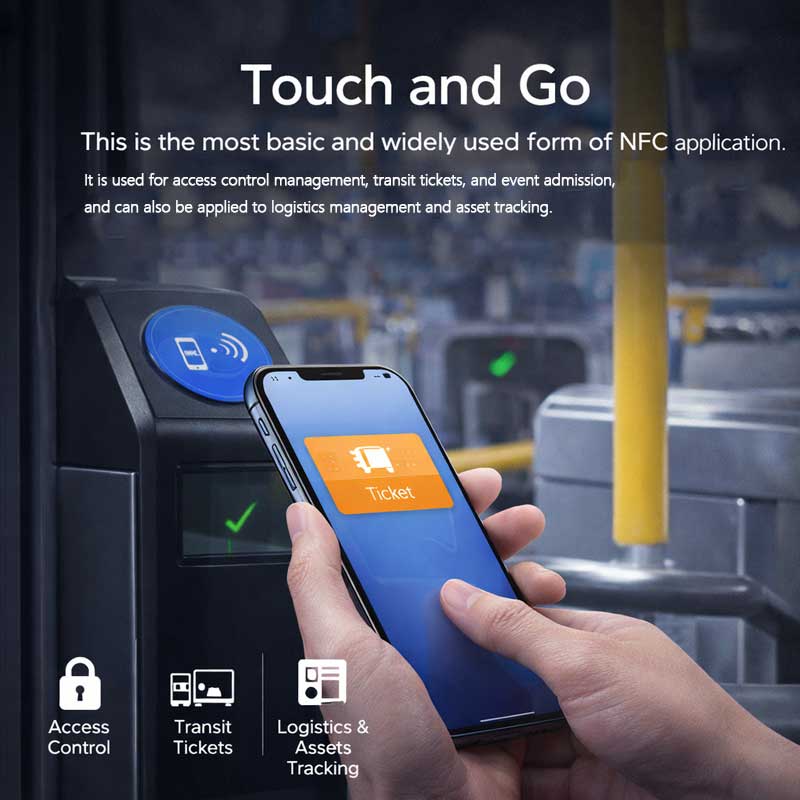
Bonyeza na Nenda
Hii ni fomu rahisi zaidi na yenye matumizi mengi zaidi ya maombi ya NFC. Watumiaji wanakaribia kifaa kinachohifadhi tiketi au mamlaka ya kuingia karibu na kisomaji ili kukamilisha utambulisho. Inatumika katika usimamizi wa udhibiti wa kuingia, tiketi za usafiri, na uthibitisho wa kuingia katika matukio, pia inaweza kutumika katika usimamizi wa logisti na kufuatilia sifa.
Gusa na Kulipa
Malipo ya simu bila mawasiliano ni maombi ya NFC yanayojulikana zaidi. Watumiaji wanakaribia kifaa chao karibu na kiterminal cha POS kinachounganishwa na NFC ili kufanya malipo na kuthibitisha shughuli. Njia hii ya kulipa ni haraka, salama, na imechukuliwa kwa upana mkubwa duniani.
Gusa na Kuunganisha
Unganisha kifaa kikuu kimoja cha NFC na kingine kwa ajili ya uhamisho wa data kati ya mtu na mtu, kama vile kupakua muziki, kushiriki picha, na kubadilishana taarifa za mwasiliano. Mbinu hii inafanya mchakato wa kuhusisha vifaa rahisi bila kuhitaji hatua za mpangilio zinazotahadharika.
Gusa na Kuchunguza
Watumiaji wanaweza kuvuta kifaa chao cha NFC karibu na vifaa vya umma vya akili au posho zilizopangwa kwa uwezo wa NFC ili kusoma taarifa za usafiri, yale ya kutangaza, au maelezo ya bidhaa. Hii inatoa njia mpya kabisa ya kushirikiana kwa ajili ya usambazaji wa mtandaoni na uboreshaji wa taarifa.
Pakia na Gusa
Watumiaji wanaweza kupokea au kupakua taarifa kwenye mtandao kwa ajili ya kufanya malipo au kudhibiti ufikiaji. Kwa mfano, watumiaji wanaweza kutuma taarifa katika muundo maalum kwa kifaa kilichowekwa kama mahali ili kudhibiti ruhusa za kufikia eneo fulani. Njia hii inashirikisha ruhusa kutoka mbali na mshirikiano katika mahali.
Thamani ya Biashara na Mtazamo wa Baadaye
Kama teknolojia ya mawasiliano ya karibu yenye uzoefu, NFC inapata ukubwa wa kimataifa kwa haraka. Je, kwa udhibiti wa upatikanaji, malipo ya simu, kufuatilia sifa za vitu, au usambazaji wa akili, NFC inaonyesha uwezekano mkubwa wa kutumika. Na kwa kuzidi kukuza ya IoT na ubadilisho wa digital, NFC itafanya kazi pamoja na teknolojia nyingine za wireless ili kuunda thamani kubwa zaidi kwa mashirika na watumiaji.
Kama muuzaji wa kitaaluma wa bidhaa za RFID/NFC, tunajitahidi kutoa suluhisho bora za kadi za akili na lebo za akili ili kusaidia ubunifu wako wa biashara na ubadilisho wa digital. Ikiwa una maswali yoyote kuhusu teknolojia ya NFC au bidhaa zake, tafadhali wasiliana nasi bila shida.


